As a trusted provider of electrical solutions.
Our experienced team offers services for both residential and commercial properties.With over 25 years of experience in the industry, we boast all of the knowledge and expertise in repairing.

Our experienced team offers services for both residential and commercial properties.With over 25 years of experience in the industry, we boast all of the knowledge and expertise in repairing.


24/7 Emergency Call Outs
Call to our Experts: 020-805-07508


Certain limitations do appy, must be persent peior to finsihed benefit.


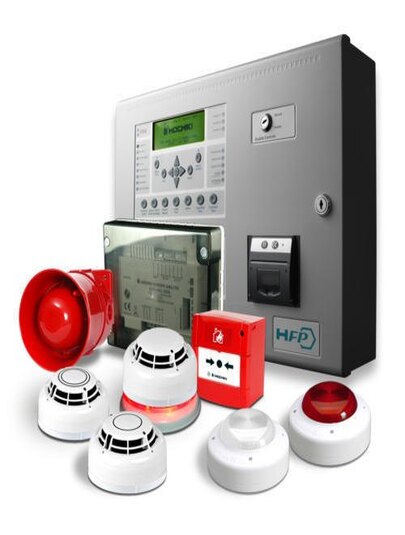
A properly installed fire alarm system is one of the most important investments you can make to protect lives, property, and business continuity. At Kojo Electrics, we provide professional fire alarm installation in London for commercial buildings, rental properties, and public spaces, ensuring every system meets current UK fire safety regulations. .
Why choose Kojo Electrics for fire alarm installation in London?We understand that no two properties are the same. Whether you're managing an office, a block of flats, a retail unit, or a public venue, our engineers take the time to assess your specific fire safety needs before recommending a solution. This ensures your system isn't just compliant on paper, but genuinely dependable when it matters most.
With Kojo Electrics, you get a fire alarm system that's professionally planned, correctly installed, and built to perform — giving you confidence that your premises, staff, and visitors are properly protected.
What we offer:
What’s Included in Our Fire Extinguisher Testing Service
Completely synergize resource taxing relationships via premier niche markets. Professionally cultivate.
Completely synergize resource taxing relationships via premier niche markets. Professionally cultivate.
Completely synergize resource taxing relationships via premier niche markets. Professionally cultivate.
Completely synergize resource taxing relationships via premier niche markets. Professionally cultivate.
Yes, in practice. UK law requires every business premises to have an "appropriate fire detection system" under the Regulatory Reform (Fire Safety) Order 2005. While the law doesn't specify an exact system type, the responsible person for the building must ensure fires can be detected and occupants warned quickly. For most commercial properties, a professionally designed fire alarm system is the only realistic way to meet this duty.
BS 5839 is the British Standard covering the design, installation, and maintenance of fire alarm systems. BS 5839-1 applies to non-domestic buildings such as offices, shops, and public premises, while BS 5839-6 covers domestic properties. It isn't law itself, but it's the benchmark regulators, insurers, and fire investigators use to judge whether your system is adequate — so compliance is effectively essential.
Responsibility follows control of the building. Landlords are typically responsible for fire alarms covering shared or communal areas and building-wide systems, while tenants may take on responsibility within their own unit depending on the lease. Whoever is named the "Responsible Person" under fire safety law must ensure the system is installed, tested, and maintained correctly.
Weekly testing (activating a different call point each time) is standard practice, with a full professional service required at least every six months by a competent engineer in line with BS 5839. Records of every test and service visit should be kept in a fire alarm logbook, as this documentation is often what's checked in the event of an inspection or incident.
This depends on your Fire Risk Assessment. Systems are categorised as L (life protection), P (property protection), or M (manual call points only), with sub-categories (L1–L5, P1–P2) determining exactly how much coverage is required. Higher-risk environments — server rooms, care homes, buildings with sleeping accommodation — generally need more comprehensive coverage than a small, single-storey office.
Non-compliance can lead to enforcement notices, invalidated insurance, unlimited fines, and in serious cases prosecution. Local authorities can also compel landlords to fix or install alarms within a set timeframe, and may carry out the work themselves and recover the cost if it isn't done.
We bring profound, practical aptitude, yet are known for our all encompassing viewpoint: we catch an incentive crosswise over limits and between the storehouses of any association.

