As a trusted provider of electrical solutions.
Our experienced team offers services for both residential and commercial properties.With over 25 years of experience in the industry, we boast all of the knowledge and expertise in repairing.

Our experienced team offers services for both residential and commercial properties.With over 25 years of experience in the industry, we boast all of the knowledge and expertise in repairing.


24/7 Emergency Call Outs
Call to our Experts: 020-805-07508


Certain limitations do appy, must be persent peior to finsihed benefit.


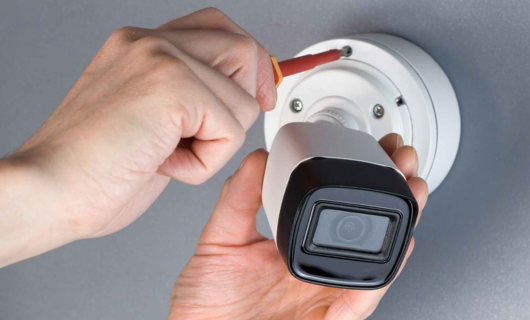

A well-designed CCTV system does two jobs at once — it puts off anyone thinking about causing trouble, and it gives you clear, usable evidence if something does happen. Kojo Electrics designs, installs, and maintains CCTV systems for homes, landlords, and businesses across Sutton and South London, so you can monitor what matters and feel genuinely confident in your property's security.
Whether you're protecting a family home, an office, a retail unit, or a rental property, a properly installed CCTV system does more than just record footage — it's a working part of your security strategy, built around how you actually use the space.
Installing CCTV isn't just a technical job — it comes with real legal responsibilities under UK GDPR and the Data Protection Act 2018. Businesses and landlords are treated as data controllers the moment their cameras capture identifiable people, which means clear signage, a documented reason for recording, secure storage, and footage kept only as long as genuinely necessary. We factor all of this into the design of your system from day one, so you're not left untangling compliance after installation.
Contact Kojo Electrics to arrange a site visit and start planning a CCTV system for your Sutton or South London property.
Keeping your eye on the ball while performing a deep dive on the start-up mentality to derive convergence on cross-platform integration.
Completely synergize resource taxing relationships via premier niche markets. Professionally cultivate.
Completely synergize resource taxing relationships via premier niche markets. Professionally cultivate.
Completely synergize resource taxing relationships via premier niche markets. Professionally cultivate.
Completely synergize resource taxing relationships via premier niche markets. Professionally cultivate.
No formal permission is needed, but there are rules. If your cameras only capture your own property, you're generally covered by the domestic purposes exemption and don't need to register with the ICO. If your cameras capture a neighbour's property, a shared path, or the street beyond your boundary, data protection law applies, and it's worth positioning cameras carefully to avoid disputes.
Yes. Businesses using CCTV are treated as data controllers with no domestic exemption, even if they only have a single camera. This generally means paying the ICO's data protection fee, displaying clear signage, and having a documented, legitimate reason for recording.
Yes, but it comes with responsibilities. Landlords and building managers must register as a data controller with the ICO, display clear signage explaining why cameras are in use, and keep footage secure and only for as long as necessary. Leaseholders typically need the freeholder's agreement before installing cameras in genuinely shared spaces.
Absolutely. We troubleshoot and fix issues with all major CCTV brands — whether we installed it or not.
At least once a year to ensure cameras, wiring, and storage systems are working properly. We offer flexible maintenance plans for your peace of mind.
There's no single fixed legal limit, but UK GDPR requires footage to be kept only as long as it's genuinely needed for its purpose — in practice, this is often somewhere between 7 and 31 days unless footage is being retained as evidence for a specific incident.
For businesses and landlords, yes — clear signage is effectively mandatory, stating that CCTV is in operation and giving contact details for the data controller. For domestic systems that only cover your own property, signage isn't a legal requirement, but it's still widely recommended as good practice and can help avoid disputes with neighbours.
Yes, but employers must be transparent about it — employees need to be informed that CCTV is in use and why, and covert surveillance is only lawful in very limited, serious circumstances. Cameras should never be placed in areas where staff have a reasonable expectation of privacy, such as toilets or changing rooms.
Wired systems generally offer more reliable footage and aren't dependent on Wi-Fi signal strength, making them well suited to larger properties or permanent installations. Wireless systems are quicker and less disruptive to install, since there's no cabling to run, which makes them a practical option for rental properties or buildings where running cable isn't straightforward.
We bring profound, practical aptitude, yet are known for our all encompassing viewpoint: we catch an incentive crosswise over limits and between the storehouses of any association.

