As a trusted provider of electrical solutions.
Our experienced team offers services for both residential and commercial properties.With over 25 years of experience in the industry, we boast all of the knowledge and expertise in repairing.

Our experienced team offers services for both residential and commercial properties.With over 25 years of experience in the industry, we boast all of the knowledge and expertise in repairing.


24/7 Emergency Call Outs
Call to our Experts: 020-805-07508


Certain limitations do appy, must be persent peior to finsihed benefit.


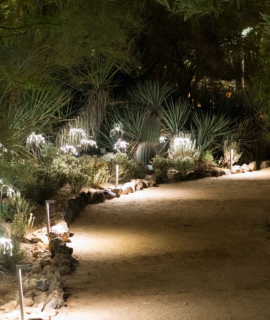
Whether you want to light up a pathway, highlight your landscaping, or create a warm, inviting space for summer evenings, Kojo Electrics designs and installs outdoor lighting built around your garden and your vision. Every installation is planned to be safe, properly weatherproofed, and energy-efficient, so it looks good and performs reliably in all UK weather.
We also offer ongoing maintenance to keep your lighting system working correctly through every season, so you're not left troubleshooting flickering lights or water-damaged fittings on your own.
Outdoor fittings face rain, frost, and damp ground all year round, so every fitting we install carries an appropriate IP (Ingress Protection) rating for its exact location — generally IP44 minimum for sheltered spots, and IP65 or higher for anything fully exposed to the elements. Mains-voltage circuits are installed in line with Part P of the Building Regulations and BS 7671 wiring standards, with RCD protection throughout for your safety.
Contact Kojo Electrics to arrange a site visit and start planning a lighting scheme for your Sutton or South London garden.
For mains-voltage (230V) outdoor lighting, yes — this work must be carried out by a qualified electrician and is notifiable under Part P of the Building Regulations. Low-voltage (12V) systems present less of a shock risk and can sometimes be installed by a competent DIYer, but professional installation still ensures the cabling, transformer, and fittings are specified correctly for long-term reliability.
It depends on how exposed the fitting will be. Sheltered spots, such as under a porch or overhang, generally need at least IP44. Anything genuinely exposed to rain — pathway lights, spike lights, wall lights on an open fence — should be IP65 minimum. Fittings near ponds or water features need a higher rating still, up to IP68 for anything submerged.
For most residential gardens, low-voltage (12V) lighting is the safer and more practical choice — it carries a much lower shock risk, is cheaper to run, and doesn't require Part P notification in the same way mains circuits do. Mains-voltage lighting is generally reserved for situations needing extra power, such as security floodlights or larger feature lighting schemes with long cable runs.
Yes. Well-placed security or floodlighting around entrances, driveways, and dark corners is one of the simplest deterrents against intruders, and can be combined with motion sensors or dusk-to-dawn photocells so lights only activate when needed, keeping running costs low.
Outdoor fittings are exposed to rain, frost, and temperature swings all year, so even a good IP-rated fitting benefits from periodic checks — looking for water ingress, corrosion, loose connections, or worn seals. Seasonal maintenance catches these issues early, before a fitting fails completely or a fault trips your circuit.
Not usually, especially with LED and low-voltage fittings, which use a fraction of the energy older halogen systems required. Adding sensors or timers so lights only run when needed keeps running costs low, and a well-designed scheme is generally a modest addition to your electricity usage rather than a significant one.
Keeping your eye on the ball while performing a deep dive on the start-up mentality to derive convergence on cross-platform integration.
Completely synergize resource taxing relationships via premier niche markets. Professionally cultivate.
Completely synergize resource taxing relationships via premier niche markets. Professionally cultivate.
Completely synergize resource taxing relationships via premier niche markets. Professionally cultivate.
Completely synergize resource taxing relationships via premier niche markets. Professionally cultivate.
Costs vary depending on the number of fittings, cable runs, and whether you choose low-voltage or mains-voltage lighting. A handful of low-voltage pathway lights is a relatively modest job, while a full landscape lighting scheme with feature lighting, security floodlights, and smart controls costs considerably more. Get in touch with Kojo Electrics for a tailored quote after a site visit.
Most domestic garden lighting doesn't require planning permission. The main legal requirement to be aware of is Part P of the Building Regulations, which covers the safety of the electrical work itself rather than planning consent — mains-voltage circuits must be installed or certified by a qualified electrician regardless of whether planning permission is needed.
Yes. Most modern outdoor lighting schemes can be fitted with timers, dusk-to-dawn photocells, motion sensors (PIR), or smart app-based controls, so lights switch on and off automatically without you needing to think about it. This is particularly useful for security lighting and helps keep energy costs down.
"Waterproof" is a marketing term with no fixed meaning, while an IP rating is a tested, certified standard defined under BS EN 60529. When choosing fittings, it's the IP rating — not the word "waterproof" on the packaging — that actually tells you whether a light will cope with UK rain, standing water, or jet washing.
Yes, and it's a common request. If your current system uses a compatible transformer and cabling, additional fittings can often be added fairly straightforwardly. Older or failing systems are sometimes better replaced entirely, particularly if the original wiring wasn't installed to current IP or Part P standards — we can assess your existing setup and advise on the most cost-effective option.
A small pathway or patio lighting job can often be completed within a day. Larger schemes involving multiple zones, feature lighting, and buried cable runs typically take longer, and we'll give you a clear timeframe after surveying your garden.
Generally, yes. LED fittings use significantly less energy than older halogen equivalents and last considerably longer, so while the upfront cost is sometimes higher, the running and replacement costs over time are usually lower.
Yes, but it needs a much higher level of water protection than standard garden lighting. Fittings near or in water typically need an IP67 or IP68 rating, and this work should always be carried out by a qualified electrician given the increased safety risk of combining electricity and water.
We bring profound, practical aptitude, yet are known for our all encompassing viewpoint: we catch an incentive crosswise over limits and between the storehouses of any association.

